There are some flavor combinations that just feel like a secret handshake, and for me, savory blueberry is one of them. The first time I tried a rich, tangy blueberry sauce on something other than a pancake, it completely changed my perspective. This Blueberry Glazed Salmon is the perfect example of that magic. It’s a dish that looks like it belongs in a high-end restaurant but comes together with surprising ease in your own kitchen. The glaze is the star—a deep, jammy concoction of blueberries, sharp balsamic, a touch of honey, and Dijon mustard that bubbles into a sticky, perfect coating for the rich salmon.
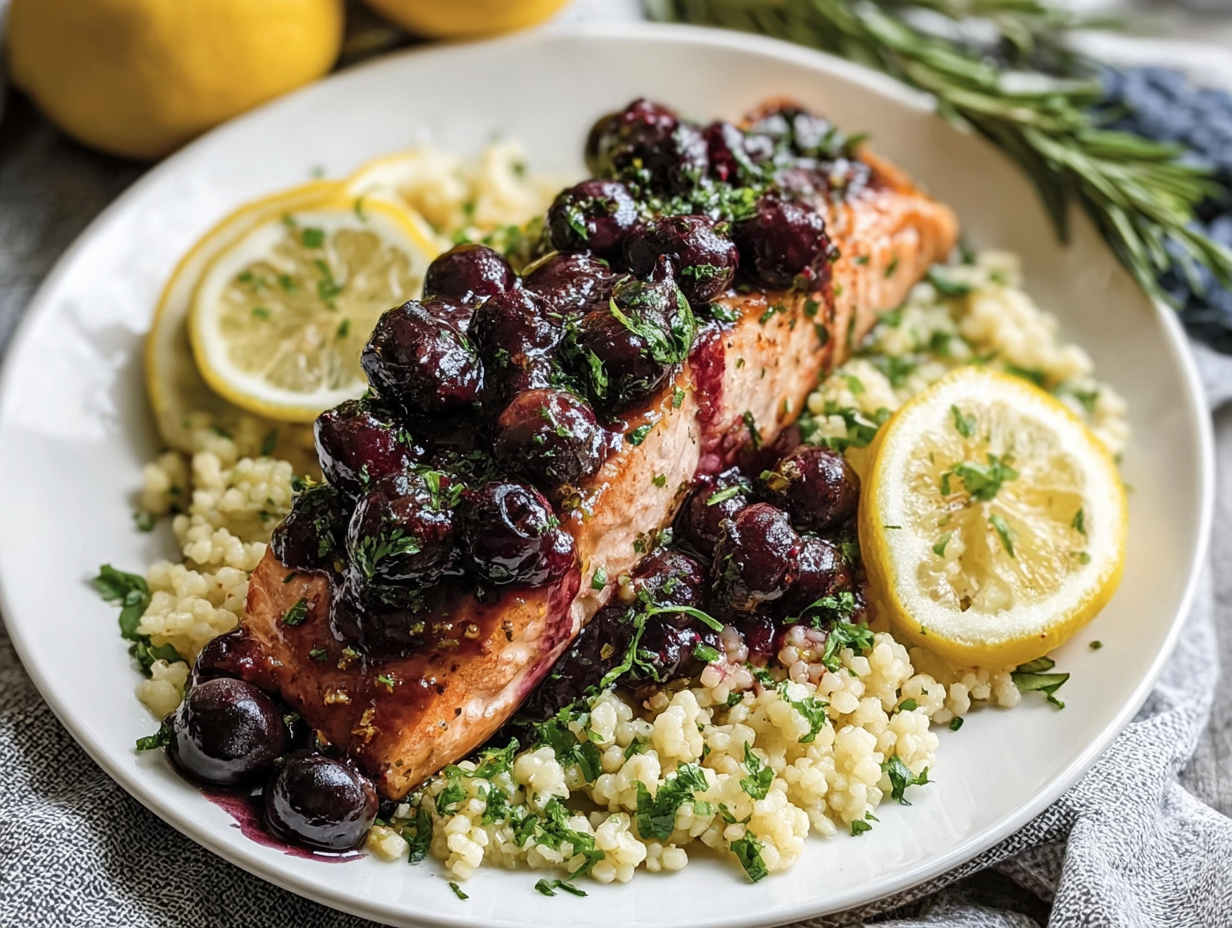
What I love most is the balance. The sweetness of the blueberries and honey is cut by the acidic punch of balsamic vinegar and lemon, creating a complex flavor that enhances the salmon without overwhelming it. As it bakes, the glaze caramelizes under the heat, forming a beautiful, glossy, jewel-toned crust. Served over a bed of fluffy, bright lemon herb couscous, the entire meal feels both elegant and incredibly comforting. It’s my go-to recipe when I want to impress guests or just treat myself to a special weeknight dinner without spending hours at the stove. It’s proof that a few simple, quality ingredients can create something truly spectacular.
Ingredients You’ll Need
This recipe relies on a handful of fresh, vibrant ingredients to create its signature flavor. The combination of fruit, acid, and herbs brings everything to life. For the best result, try to use the freshest salmon you can find; it really makes a difference in the final texture and taste. The glaze comes together with mostly pantry staples, making this an easy dish to whip up any night of the week. Below is everything you’ll need to create the salmon and the couscous. Don’t be afraid to adjust the herbs or seasoning based on what you have on hand—this recipe is wonderfully flexible.
For the Blueberry Glazed Salmon:
- Salmon Fillets: 4 fillets, about 5 to 6 ounces each. You can use skin-on or skin-off, whichever you prefer.
- Olive Oil: 1 teaspoon for searing and baking.
- Salt & Black Pepper: To taste, for seasoning the fish.
- Blueberries: ¾ cup. Fresh works beautifully, but frozen is a great option too; no need to thaw them first.
- Balsamic Vinegar: 2 tablespoons. It adds a deep, tangy complexity to the glaze.
- Honey or Maple Syrup: 1 tablespoon for a touch of sweetness to balance the vinegar.
- Dijon Mustard: 1 teaspoon. This acts as an emulsifier and adds a subtle savory kick.
- Lemon Zest: The zest of half a lemon brightens up the glaze.
For the Lemon Herb Couscous:
- Dry Couscous: 1 cup. Standard Moroccan couscous is perfect here.
- Boiling Water or Vegetable Broth: 1 cup. Broth will add an extra layer of flavor.
- Lemon: The zest of one whole lemon and the juice of half.
- Olive Oil: 1 tablespoon of good quality extra virgin olive oil.
- Fresh Herbs: 2 tablespoons of chopped fresh parsley or basil. A mix of both is also delicious.
- Salt & Pepper: To taste.
Step-by-Step Instructions
This Blueberry Glazed Salmon recipe is designed to be straightforward. We’ll make the glaze first, then prep and bake the salmon while the couscous steams. The process is simple, but the results are incredibly flavorful. Follow these steps for a perfectly cooked, beautifully glazed piece of fish every time. The key is to watch the glaze so it thickens without burning and to not overcook the salmon. Let’s get started.
- Make the Blueberry Glaze: In a small saucepan, combine the blueberries, balsamic vinegar, honey (or maple syrup), Dijon mustard, and the zest of half a lemon. Bring the mixture to a simmer over medium heat. As it heats, gently mash about half of the blueberries with the back of a spoon to release their juices. Let it simmer for 5-7 minutes, stirring occasionally, until the sauce has thickened enough to coat the back of a spoon. Once it’s ready, remove it from the heat and set it aside.
- Prepare the Salmon: Preheat your oven to 400°F (200°C). Pat the salmon fillets completely dry with a paper towel—this is crucial for getting a nice texture. Rub each fillet with olive oil and season generously on all sides with salt and black pepper. Place the fillets on a parchment-lined baking sheet, leaving a little space between each one.
- Glaze and Bake: Spoon about three-quarters of the balsamic blueberry glaze over the top of the salmon fillets, spreading it evenly. Reserve the remaining glaze for serving. Place the baking sheet in the preheated oven and bake for 12-15 minutes. The exact time will depend on the thickness of your fillets. The salmon is done when it flakes easily with a fork or reaches an internal temperature of 135-140°F. For a more caramelized top, you can switch the oven to broil for the last 1-2 minutes, but watch it very closely to prevent the glaze from burning.
- Prepare the Lemon Herb Couscous: While the salmon is baking, make the couscous. Place the dry couscous in a heatproof bowl. Pour the boiling water or broth over it, stir once, and cover the bowl tightly with a lid or plastic wrap. Let it stand for 5-10 minutes, until all the liquid has been absorbed.
- Assemble and Serve: Once the couscous is ready, fluff it with a fork. Gently stir in the lemon zest, lemon juice, olive oil, and chopped fresh herbs. Season with salt and pepper to taste. To serve, spoon a bed of the lemon herb couscous onto each plate, top with a fillet of the Blueberry Glazed Salmon, and drizzle with any remaining glaze.
Tips & Tricks for Perfect Blueberry Glazed Salmon
After making this dish countless times, I’ve picked up a few little secrets that really elevate it from good to great. Cooking salmon can sometimes be intimidating—it’s a fine line between perfectly flaky and disappointingly dry. These tips are all about ensuring your fish is moist and your glaze is perfect. The goal is a tender, flavorful fillet with a sticky, caramelized top that is packed with the incredible flavor of the balsamic blueberry glaze. A little extra attention to these details will guarantee a stunning result and make the cooking process feel effortless and enjoyable.
Don’t Overcook the Salmon
The golden rule of salmon is to pull it from the oven just before you think it’s done. It will continue to cook from residual heat as it rests. The best way to check for doneness is to use a fork to gently press on the thickest part of the fillet. If it begins to flake easily, it’s ready. If you have an instant-read thermometer, aim for an internal temperature of around 135°F for a moist, tender result. Remember, you can always cook it a little more, but you can’t undo dry, overcooked fish.
Get the Glaze Consistency Right
The consistency of your blueberry glaze is key. You want it thick enough to cling to the salmon but not so thick that it becomes a solid jam. As you simmer it, watch for the moment it nicely coats a spoon you dip into it. It will also thicken slightly as it cools. If your glaze gets too thick, you can stir in a teaspoon of water or balsamic vinegar to thin it out. If it’s too thin, just let it simmer for a few more minutes until it reduces further. This simple step ensures that beautiful, glossy finish.
Can I make the glaze ahead of time?
Absolutely! The blueberry glaze can be made up to three days in advance and stored in an airtight container in the refrigerator. This is a fantastic time-saver for a busy weeknight. When you’re ready to cook, you might need to gently warm the glaze on the stovetop or in the microwave for a few seconds to make it easier to spread over the salmon fillets. This makes the final dinner prep incredibly fast.
Substitutions and Variations
One of the best things about this Blueberry Glazed Salmon recipe is how adaptable it is. Whether you have dietary restrictions or just want to experiment with different flavors, there are plenty of simple swaps you can make. These variations allow you to tailor the dish to your personal taste or use up ingredients you already have in your pantry or fridge. Don’t hesitate to get creative—cooking should be fun, and this recipe provides a wonderful template for your own culinary twists. The core combination of sweet, tangy, and savory is a great base for many different ingredients.
- Different Fish: While salmon is perfect with this glaze, other sturdy fish work well too. Try it with Arctic char, cod, or even halibut. You may need to adjust the cooking time slightly depending on the thickness of the fillets.
- Other Sweeteners: If you don’t have honey, maple syrup is a fantastic substitute and adds a slightly different, earthier sweetness. Agave nectar would also work well in the glaze.
- Herb Variations: The couscous is a blank canvas for fresh herbs. Instead of parsley or basil, try fresh dill, mint, or chives for a different flavor profile. Each one brings a unique freshness that complements the rich salmon.
- Grain Swaps: If you’re not a fan of couscous or want a gluten-free option, this dish is excellent served over quinoa, fluffy rice, or even a creamy orzo.
- Add a Little Heat: For a spicy kick, add a pinch of red pepper flakes or a tiny dash of your favorite hot sauce to the blueberry glaze while it simmers. It creates a wonderful sweet and spicy contrast.
Can I use frozen blueberries for the glaze?
Yes, frozen blueberries work perfectly for the easy salmon glaze, and you don’t even need to thaw them first. They might release a bit more liquid than fresh berries, so you may need to simmer the glaze for an extra minute or two to get it to the right consistency. Using frozen berries makes this a great recipe to enjoy year-round, even when blueberries aren’t in season.
Frequently Asked Questions
What should I serve with Blueberry Glazed Salmon?
Beyond the lemon herb couscous, this dish pairs beautifully with a variety of simple sides. Roasted or steamed green vegetables like asparagus, broccoli, or green beans are a fantastic choice. Their earthy flavor provides a nice contrast to the sweet and tangy glaze. A simple side salad with a light vinaigrette also works well to cut through the richness of the salmon.
How do I store and reheat leftovers?
Store any leftover salmon and couscous in separate airtight containers in the refrigerator for up to 2 days. To reheat the salmon, it’s best to use the oven or a toaster oven set to a low temperature (around 275°F) to warm it gently without drying it out. You can also enjoy the leftover salmon cold, flaked over a salad for a delicious lunch.
Is it better to use salmon with the skin on or off?
This is entirely a matter of personal preference. Skin-on salmon has a couple of benefits: the skin provides a barrier between the fish’s flesh and the hot pan, which can help prevent it from overcooking. If cooked correctly, the skin can also become wonderfully crispy. However, for a glazed recipe like this where the top is the main focus, skin-off fillets are perfectly fine and can be easier to serve and eat.
A Truly Special Dish
There’s something deeply satisfying about pulling this Blueberry Glazed Salmon from the oven. The kitchen fills with an incredible aroma, and the sight of that deep purple, bubbly glaze is just wonderful. It’s a meal that feels special occasion-worthy, yet it’s simple enough that you can realistically make it on a Tuesday night when you need a little boost. I hope you give this recipe a try and that it brings a little bit of that unexpected, delicious magic to your table. It has become a true favorite in my home, and I’m sure it will be in yours too.