Some dinners are planned carefully, while others happen because the clock is moving too quickly and everyone is hungry. This tomato pasta sauce with cream cheese belongs firmly in the second category. I first made it on one of those evenings when the fridge looked uninspiring, but there was pasta in the cupboard, a jar of tomato passata, and half a tub of cream cheese waiting to be used.
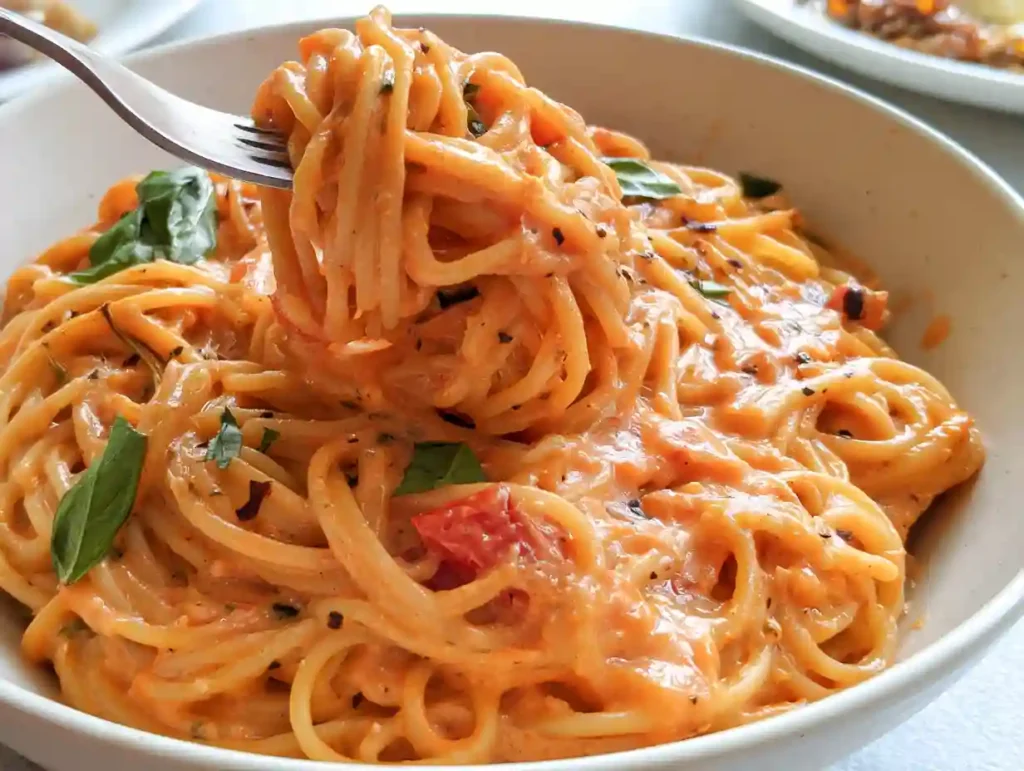
A few minutes later, the kitchen smelled of gently cooked garlic, sweet tomato, and basil. The cream cheese melted into the sauce and turned it soft, silky, and wonderfully rich without needing a long list of ingredients. The result tasted like comfort food, but the preparation was as easy as boiling pasta.
This is one of those easy pasta recipes worth remembering. It works as a quick vegetarian dinner, a relaxed family meal, or a simple dish for evenings when you want something warm and satisfying without much effort. The sauce clings beautifully to penne, spaghetti, fusilli, or whatever pasta you already have.
Easy Pasta Ingredients
The ingredient list is short, but each item has a job. Tomato passata gives the sauce a smooth base, while cream cheese adds body and a gentle tang. Freshly grated Parmesan brings a salty, nutty finish, and pasta water helps everything come together into a glossy sauce.
- 225 g pasta, such as penne, fusilli, or spaghetti
- 1 tablespoon butter or olive oil
- 2 garlic cloves, finely minced
- 1/2 small onion, finely diced
- 1/4 teaspoon chili flakes, optional
- 200 ml tomato passata or smooth tomato puree
- 1 teaspoon dried basil, or 1 tablespoon chopped fresh basil
- 120 g full-fat cream cheese
- 30 g freshly grated Parmesan cheese, plus extra to serve
- 60 ml reserved pasta water, plus more if needed
- 1/4 teaspoon fine salt, or to taste
- 1/8 teaspoon freshly ground black pepper
How to Make Cream Cheese Pasta
Bring a large pot of generously salted water to a boil. Add the pasta and cook until al dente, following the timing on the package. Before draining, scoop out at least one cup of the starchy cooking water. It may look like an ordinary leftover, but it is the little trick that helps the sauce become smooth and cling to every piece of pasta.
While the pasta cooks, warm the butter or olive oil in a wide skillet over medium heat. Add the onion, garlic, and chili flakes if using. Cook for about two minutes, stirring often, until the onion softens and the garlic smells fragrant. Keep the heat moderate so the garlic turns sweet rather than bitter.
Pour in the passata and sprinkle in the basil. Lower the heat and let the sauce gently simmer for five minutes. This short cooking time takes away the raw tomato edge while keeping the flavor bright. Stir occasionally and add a pinch of pepper as the sauce cooks.
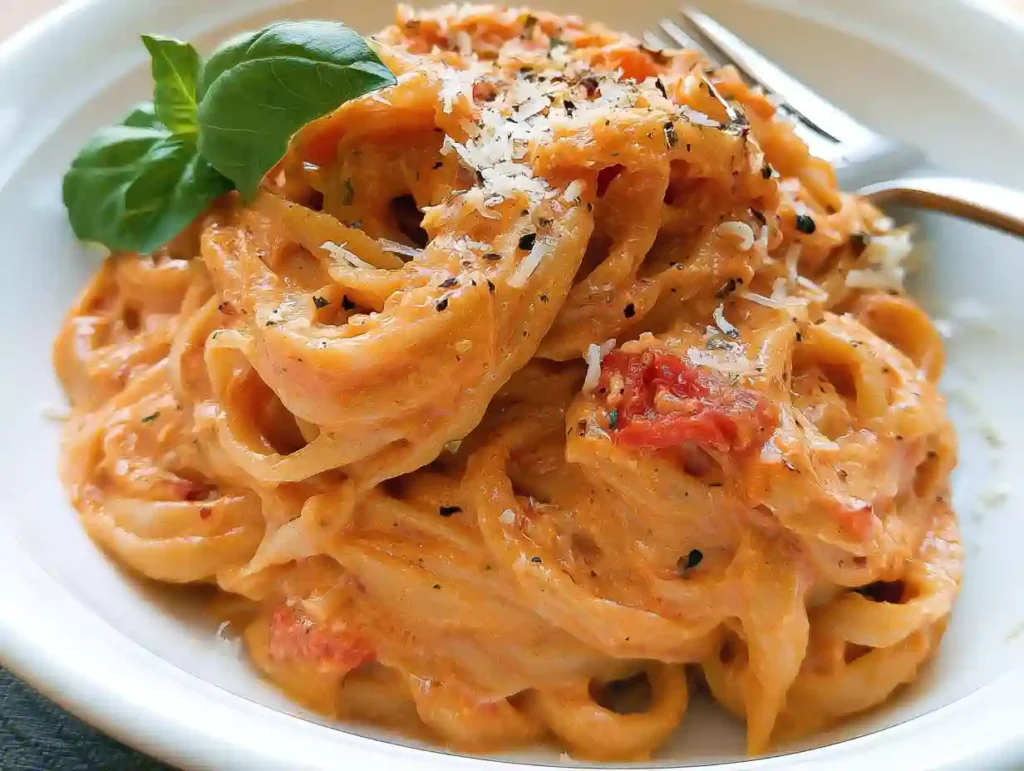
Turn the heat to low, then add the cream cheese and Parmesan. Stir until the cheese melts into the tomato sauce. Add the reserved pasta water a little at a time, starting with 60 ml. The sauce should look silky and pourable, not watery. Taste and adjust the salt and pepper.
Add the drained pasta directly to the skillet and toss until every piece is coated. If the sauce seems thick, add another splash of pasta water. Serve immediately with extra Parmesan, fresh basil, and a final twist of black pepper.
Pro Tips for Better Results
- Use full-fat cream cheese for the smoothest, richest texture.
- Let the cream cheese soften briefly at room temperature so it melts faster.
- Do not boil the sauce strongly after adding the cheese, because gentle heat keeps it creamy.
- Grate Parmesan finely so it melts without leaving lumps.
- Reserve more pasta water than you think you need. The sauce thickens as it stands.
Variations and Substitutions
For extra vegetables, stir in baby spinach, peas, roasted peppers, or sautéed mushrooms just before adding the pasta. A handful of chopped fresh basil gives the dish a brighter flavor than dried basil. You can replace Parmesan with Pecorino Romano, although it will taste saltier.
No passata? Use canned crushed tomatoes and simmer the sauce a little longer. Neufchâtel or a soft garlic-and-herb cream cheese can replace regular cream cheese, but check the seasoning before adding more salt. For a lighter texture, use reduced-fat cream cheese and add a little extra pasta water.
Troubleshooting, Storage, and Serving
If the sauce is too thick, loosen it with warm pasta water one tablespoon at a time. If it tastes sharp, let it simmer for another minute or add a small pinch of sugar. If the cheese looks slightly grainy, lower the heat and whisk in a splash of pasta water. Avoid reheating it over high heat, which can make the sauce separate.
Store leftovers in an airtight container in the refrigerator for up to three days. Reheat gently in a skillet with a splash of milk or water, stirring until creamy again. This dish is best served hot with a green salad, steamed vegetables, or warm crusty bread for catching every last bit of sauce.
Frequently Asked Questions
Can I use any pasta shape?
Yes. Spaghetti, penne, fusilli, rigatoni, and shells all work well. Short shapes hold the sauce especially nicely.
Can I make this recipe vegetarian?
Yes, the main recipe is vegetarian. Check that your Parmesan is made with vegetarian-friendly rennet if that matters to you.
Can I use tomato sauce instead of passata?
Yes. Use the same amount, but simmer it for a few extra minutes if it seems thinner than passata.
Why is pasta water important?
The starch in pasta water helps loosen the cream cheese and bind the sauce so it coats the pasta smoothly.
Can I add meat or chicken?
Certainly. Stir in cooked chicken, Italian sausage, or crispy pancetta near the end. For a meat-free option, mushrooms or lentils add satisfying texture.
Can I freeze the sauce?
You can freeze it, although the texture may change slightly after thawing. Reheat it gently with a splash of milk or pasta water and whisk until smooth.
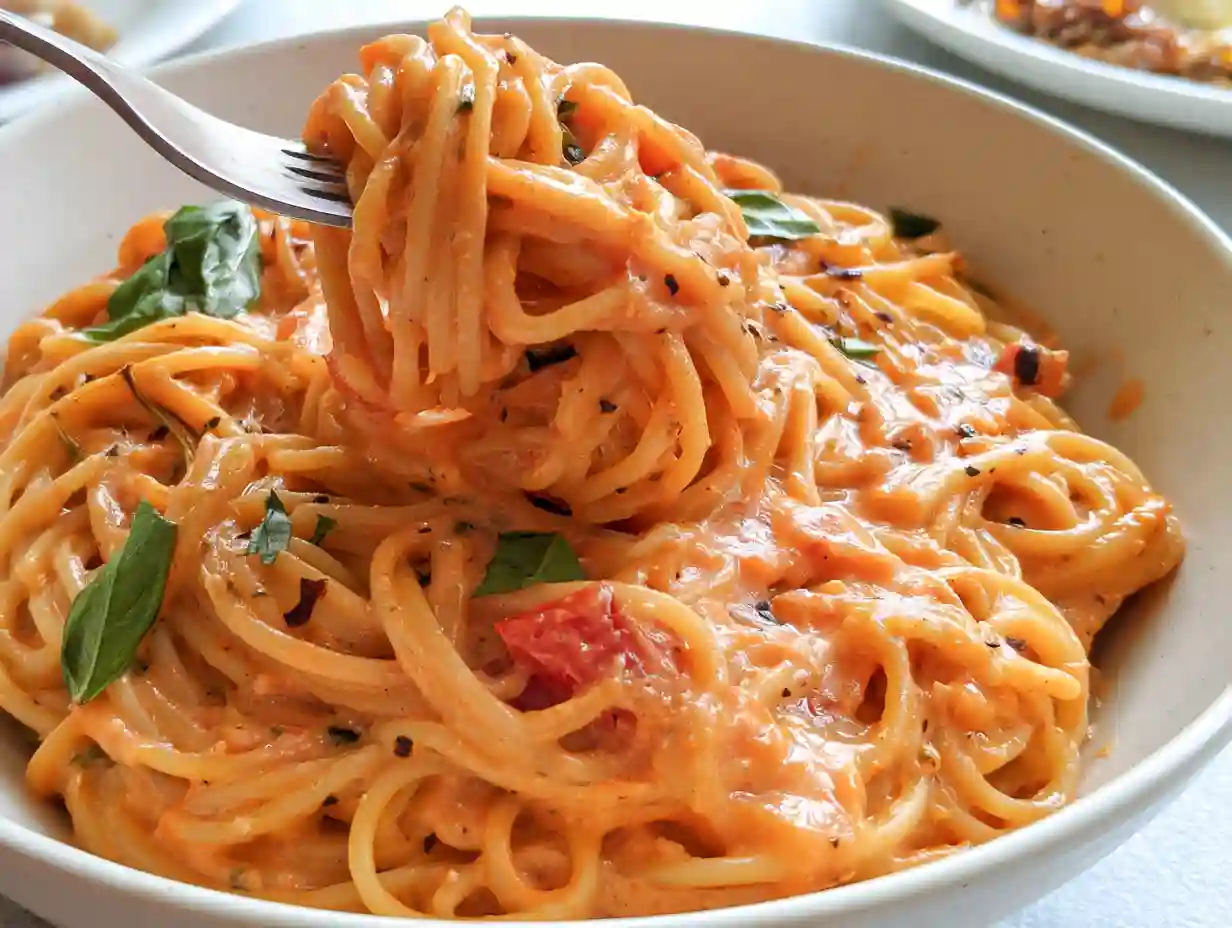

Tomato Pasta Sauce with Cream Cheese
Ingredients
Equipment
Method
- Bring a large pot of salted water to a boil. Cook the pasta until al dente, then reserve at least 1 cup of pasta water before draining.
- Heat the butter or olive oil in a wide skillet over medium heat. Add the onion, garlic, and optional chili flakes. Cook for about 2 minutes until fragrant and softened.
- Add the tomato passata and dried basil. Lower the heat and simmer gently for 5 minutes.
- Reduce the heat to low. Stir in the cream cheese, Parmesan, and 60 ml pasta water until smooth and creamy.
- Season with salt and black pepper. Add more pasta water if the sauce is too thick.
- Add the drained pasta to the skillet and toss until completely coated. Serve immediately with extra Parmesan and basil.
Notes
- Use full-fat cream cheese for the smoothest texture.
- Keep the heat low after adding the cheese to prevent separation.
- Store leftovers in an airtight container in the refrigerator for up to 3 days.
- Reheat gently with a splash of milk or pasta water.